The Art of the Timeline: Planning a Stress-Free Indian Wedding Photography Schedule
If you’re planning a wedding in the Delhi NCR region. Whether it’s a grand celebration in a Faridabad farmhouse, a sleek evening in a Gurgaon hotel, or a heritage-style destination wedding, you’ve likely realized one thing: time moves differently on a wedding day. You plan for months, but the day itself feels like a blur of colors, emotions, and unfortunately, unexpected delays. That’s why a well-planned wedding photography timeline can make the entire day feel smoother and far less stressful.
Table of Contents
As photographers, we aren’t just there to click buttons. We are often the unofficial timekeepers of the day. We see where the bottlenecks happen. We know why the sunset portraits got canceled (usually because of the makeup artist) and why the family photos felt like a chaotic school assembly. Planning a wedding photography timeline isn’t about rigid control; it’s about creating breathing room so you can actually enjoy your day while we capture it.
Why a Wedding Photography Timeline Matters
In the context of an Indian wedding, a schedule is more of a “hopeful guideline” than a law. However, without a structured plan, the first thing to get sacrificed is always the couple portraits. When the Baraat arrives late or the Pundit starts the ceremony early, the hour we set aside for your photos suddenly shrinks to ten minutes of rushed, sweaty shots before you’re whisked away to the Varmala.
A well-thought-out Indian wedding photography schedule ensures that the creative team has the light and the time they need to produce the high-end imagery you’re paying for. It’s the difference between “getting the shots” and “creating art”.
Start With Important Moments First
When building your timeline, don’t start from the morning. Start from the “Fixed Anchors”. These are the things you cannot change: the Muhurat for the Phera, the booked time for the Varmala, or the venue’s hard cutoff for the music. Once those are on the paper, work backward.
In places like Noida or Aligarh, where traffic can be unpredictable, we always suggest looking at the travel time between the hotel and the venue and doubling it. If Google Maps says 30 minutes, give it an hour. This “buffer logic” should apply to every major transition in your day.
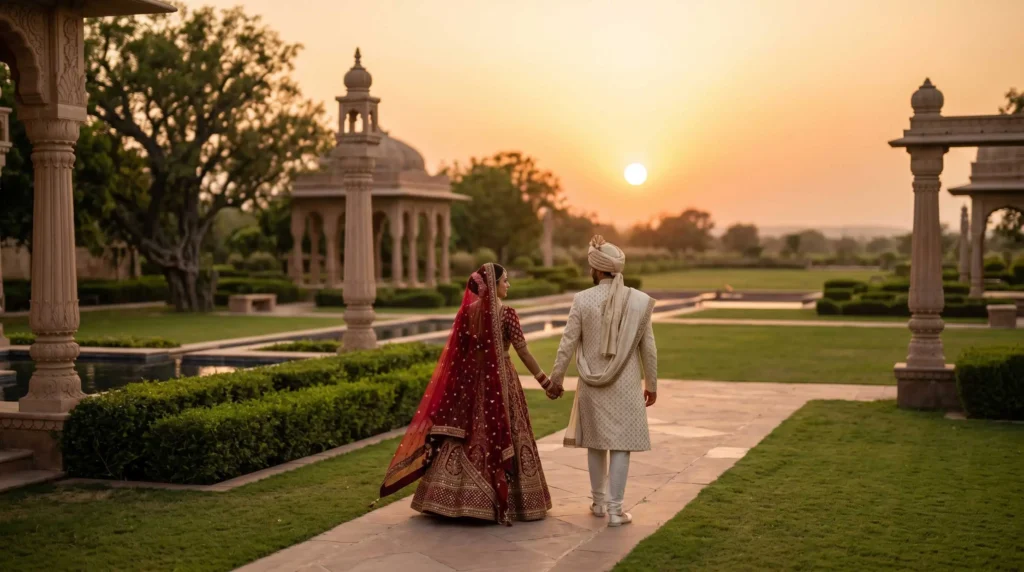
Light is the raw material of photography. While we carry professional lighting setups for the reception and the Pheras, nothing beats the “Golden Hour“. If you are having an outdoor wedding in a sprawling Faridabad resort, the 45 minutes before sunset are precious. This is when the light is soft, warm, and incredibly flattering.
Pro Tip: Check the exact sunset time for your wedding date. If the sun sets at 5:45 PM, you need to be in your wedding attire and ready for portraits by 5:00 PM. If your Varmala is scheduled for exactly 6:00 PM, you will likely miss the best light of the day while waiting behind the scenes.
Keep Buffer Time for Delays
The “Makeup Delay” is the single most common cause of stress in Indian wedding photography. It’s almost a tradition at this point. If your MUA says they will be done by 4:00 PM, tell your photographer you will be ready by 5:00 PM. This one-hour buffer saves your sanity. It allows for a relaxed dupatta draping, jewelry adjustments, and those crucial “getting ready” shots without the videographer hovering anxiously in the corner.
Baraat delays are the second major factor. In Gurgaon or South Delhi, a Baraat that was supposed to take 45 minutes can easily last two hours. If your photography planning doesn’t account for the ‘enthusiasm’ of your cousins on the dance floor, your dinner and subsequent Phera photos will be pushed into the late night, when everyone is exhausted.
Bridal Preparation Timing
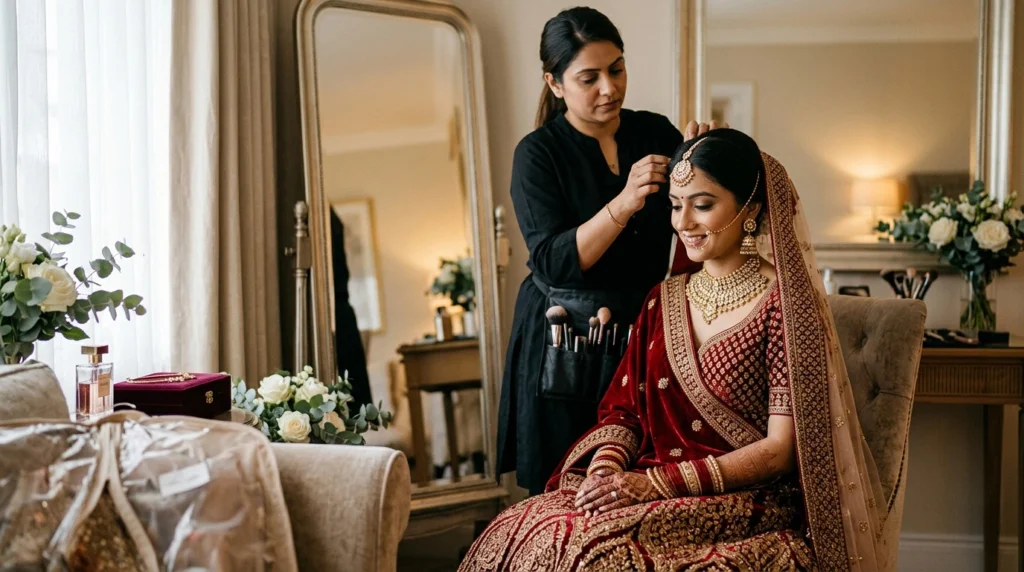
We recommend starting bridal prep photography about 90 minutes before the bride is fully ready. We don’t need to be there for the base layer of foundation. We want to be there for the final touches-the jewelry, the veil, the moments with your mother or bridesmaids. This is also the best time for those stunning solo bridal portraits while the makeup is fresh and the room is (hopefully) not yet cluttered with packing suitcases and snack boxes.
Family Photo Coordination Tips
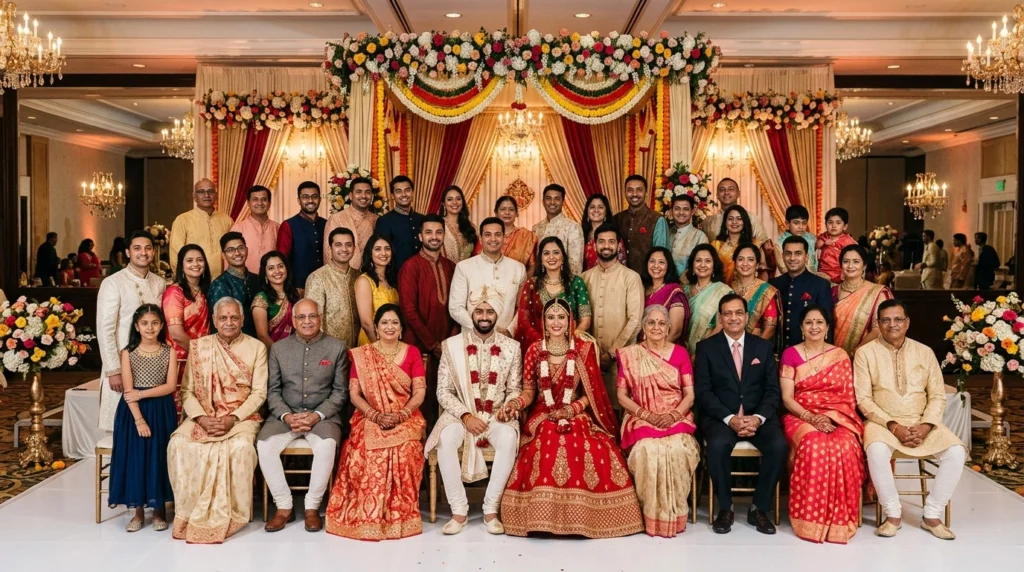
Family photos can be the most draining part of the night. To keep this from becoming a 2-hour ordeal, create a “Shot List”. Assign one person from each side of the family. Someone who knows everyone’s names and has a loud voice, to act as a coordinator. Their job is to gather the “Next Group” while the current group is being photographed. This keeps the flow moving and prevents the couple from standing on stage for hours with frozen smiles.
Couple Portrait Timing
If you aren’t doing a “First Look” (which we highly recommend for modern Indian weddings), the only time for couple portraits is usually between the ceremony and the reception, or immediately after the Varmala. If you can sneak away for just 20 minutes while guests are heading toward the buffet, you’ll get the most intimate, relaxed photos of the day.
“The best photos happen in the quiet gaps between the big events. Protect those gaps.”
Common Wedding Timeline Mistakes
- Underestimating the First Look: Many couples worry it breaks tradition, but doing a First Look allows you to finish all your couple and immediate family portraits before the guests arrive. This means you can actually attend your own cocktail hour!
- Ignoring Venue Transitions: Moving 300 people from a garden Varmala to an indoor hall takes 30 minutes, not 5.
- Forgetting to Eat: A hungry couple is a stressed couple. Schedule 20 minutes for a private snack. It shows in the photos when you’re energized versus when you’re crashing.
Photographer’s Perspective
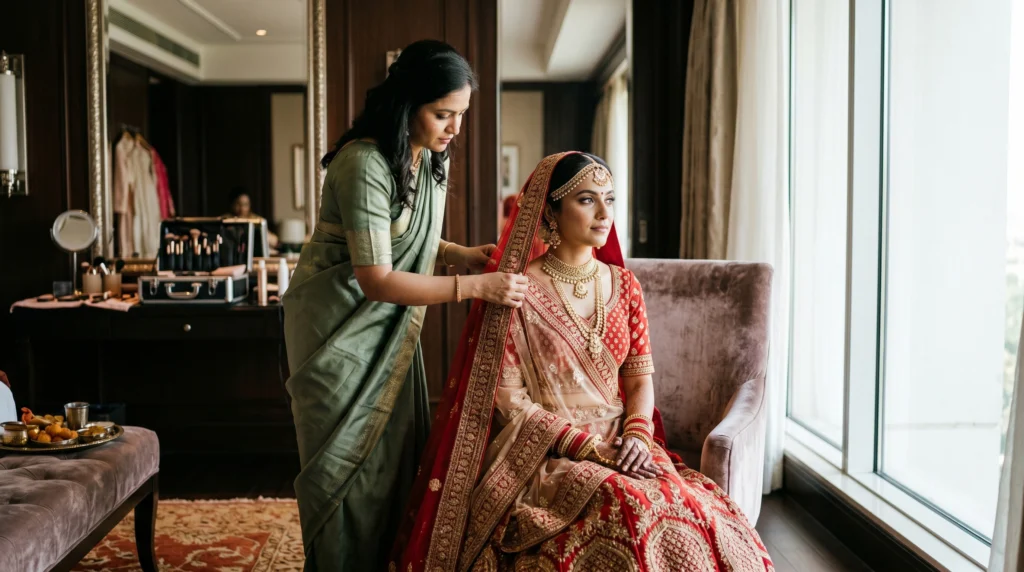
From our side of the lens, wedding photography services is about partnership. We want to be your allies. If the schedule starts to slip, we will prioritize. We might skip the shot of your shoes to ensure we get the shot of your grandmother’s reaction during the Milni. Trust your photographer to make those calls when time gets tight.
FAQ Section
How much time should we give for bridal portraits?
Ideally, 45 minutes of dedicated time once you are fully dressed, including your jewelry and veil. This allows for both cinematic video shots and still portraits.
What if our Baraat is late and we miss the sunset?
Don’t panic. A professional team will use off-camera flash to create “night-time magic” shots. They won’t look like sunset shots, but they can be equally dramatic and editorial.
Should we take family photos on the stage or off-stage?
Off-stage is always better for aesthetics, but on-stage is more efficient for large Indian families. If you have more than 15 groups, stick to the stage to save time.
What happens if the wedding runs behind schedule?
Even the most well-planned Indian weddings can run late. Makeup delays, extended Baraats, traffic, and venue transitions are extremely common. An experienced wedding photography team knows how to adapt when timelines shift. Instead of panicking, the focus usually becomes prioritizing the moments that matter most, like couple portraits, family photographs, and key ceremonies. This is also why buffer time is so important while planning a wedding photography timeline. A flexible schedule creates breathing room and helps the day feel far less rushed, even when things don’t go exactly as planned.
Conclusion
Planning your wedding day timeline is ultimately about respect. Respect for your own energy and for the memories you want to preserve. By building in buffers, prioritizing light, and communicating clearly with your vendors in Delhi, Faridabad, Aligarh or beyond, you set yourself up for a day that feels like a celebration rather than a marathon.
If you’re looking for a team that understands the rhythm of Indian weddings and can help you navigate these timings with ease, let’s talk. We don’t just take photos; we help you find the space to enjoy them.